Computer science mind map
Map a paper, a lecture or your course notes into concepts, how they work, and how they connect.
No sign-up needed: 3 free tries, up to 5,000 characters each.
A real computer science mind map
Generated by MindLM with the same pipeline you use, not edited by hand. Expand the nodes, or open your own copy in the editor.
What you add
1706.03762v7.pdf
PDF · 15 pages
15 pages · ~6,100 words becomes 77 nodes
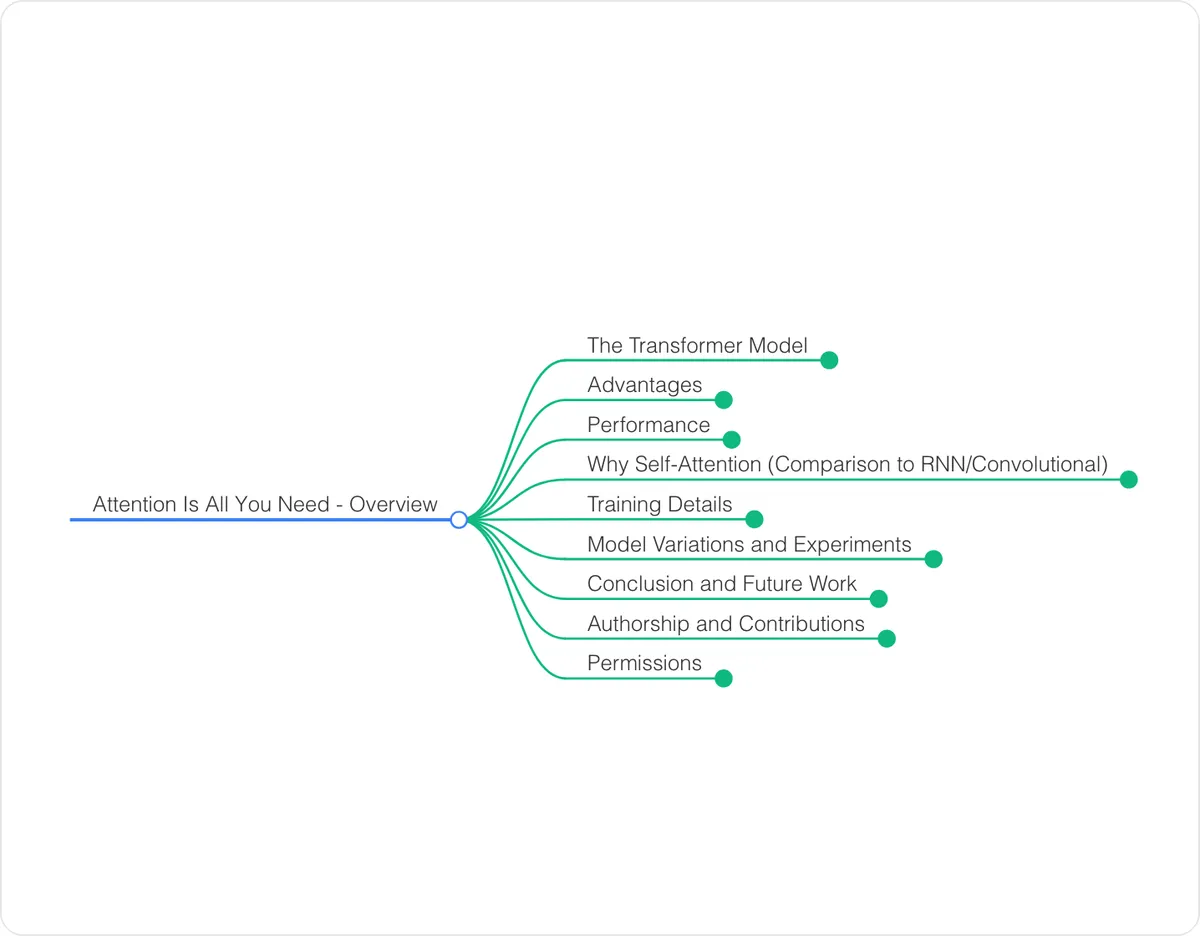 Loading the interactive mind map…
Drag to move, click a node to fold it.
What you add
But what is a neural network? | Deep learning chapter 1
YouTube · 18:40Pro
18:40 · ~3,400 words becomes 101 nodes
3Blue1Brown on YouTube
Free accounts can try one YouTube video (up to 20 minutes); unlimited YouTube input is on Pro and Max. See pricing
View source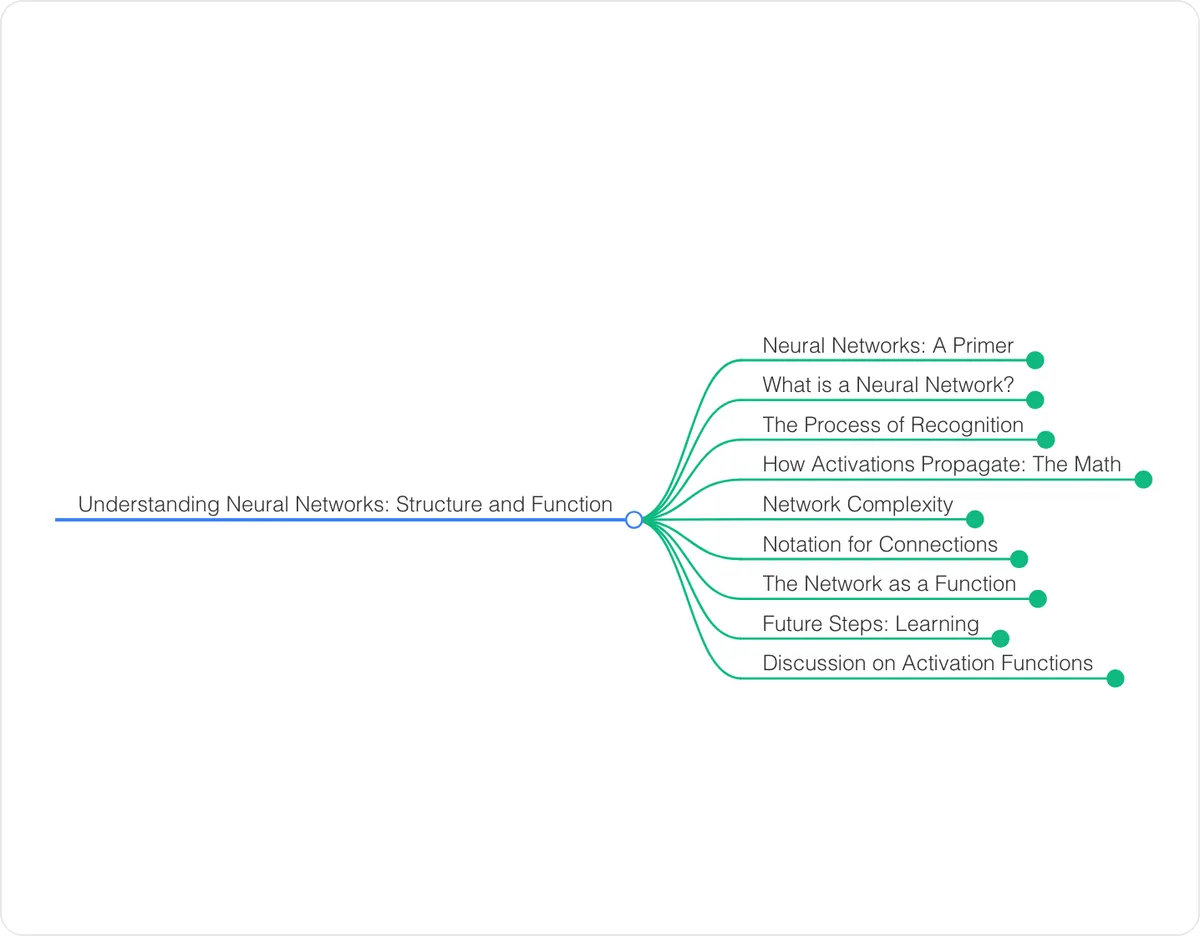 Loading the interactive mind map…
Drag to move, click a node to fold it.
How to structure a computer science mind map
This is how MindLM organizes the map, and a good checklist when you edit it yourself.
Problem
What was slow, wrong or impossible before. Most CS ideas only make sense next to the limitation they remove.
Core idea
The mechanism in one or two nodes — "attention instead of recurrence", "hash the key to an index".
How it works
The components or steps, each as a child branch, with the formula or pseudocode kept as a leaf.
Complexity and results
Big-O, benchmarks, or the numbers a paper reports — the evidence that the idea works.
Trade-offs and uses
When not to use it, what it costs, and where it shows up in real systems.
When to use it
Read a paper before the reading group
Upload the PDF and get problem, method, experiments and limitations as branches, then go back to the sections that matter.
Turn a lecture into revision notes
Map a recorded lecture or a YouTube explainer, then add your own notes to the branches you found hard.
Compare two approaches
Paste notes on two data structures or protocols and see their trade-offs side by side before an interview or a design review.
How it works
Paste text or a link
Drop in an article, notes or a webpage URL. Once signed in, upload a PDF or eBook.
Get the map in 1–3 minutes
AI reads the content, keeps its structure and lays it out as branches you can open one at a time.
Navigate, edit, export
Collapse and expand branches, rename nodes, then export as PNG, Markdown, or XMind to use anywhere.
FAQ
Does it handle formulas and code?
Formulas and short code snippets are kept as text on the relevant node. Long code listings are summarized rather than copied line by line, since a mind map is for structure, not source code.
Can I map a whole textbook chapter?
Yes. Sign in and upload the PDF or EPUB; the chapter headings become the first-level branches. The free trial on this page takes pasted text up to 5,000 characters.
Which languages are supported?
The source can be in English, Chinese or most major languages, and you can choose the language of the mind map separately — useful for reading English papers in Chinese.
Keep exploring
Ready to map your next PDF, video, or notes?
No setup needed. Start in your browser instantly.
Encrypted storage · Your data never trains AI models · Export anytimeHow we protect your data